
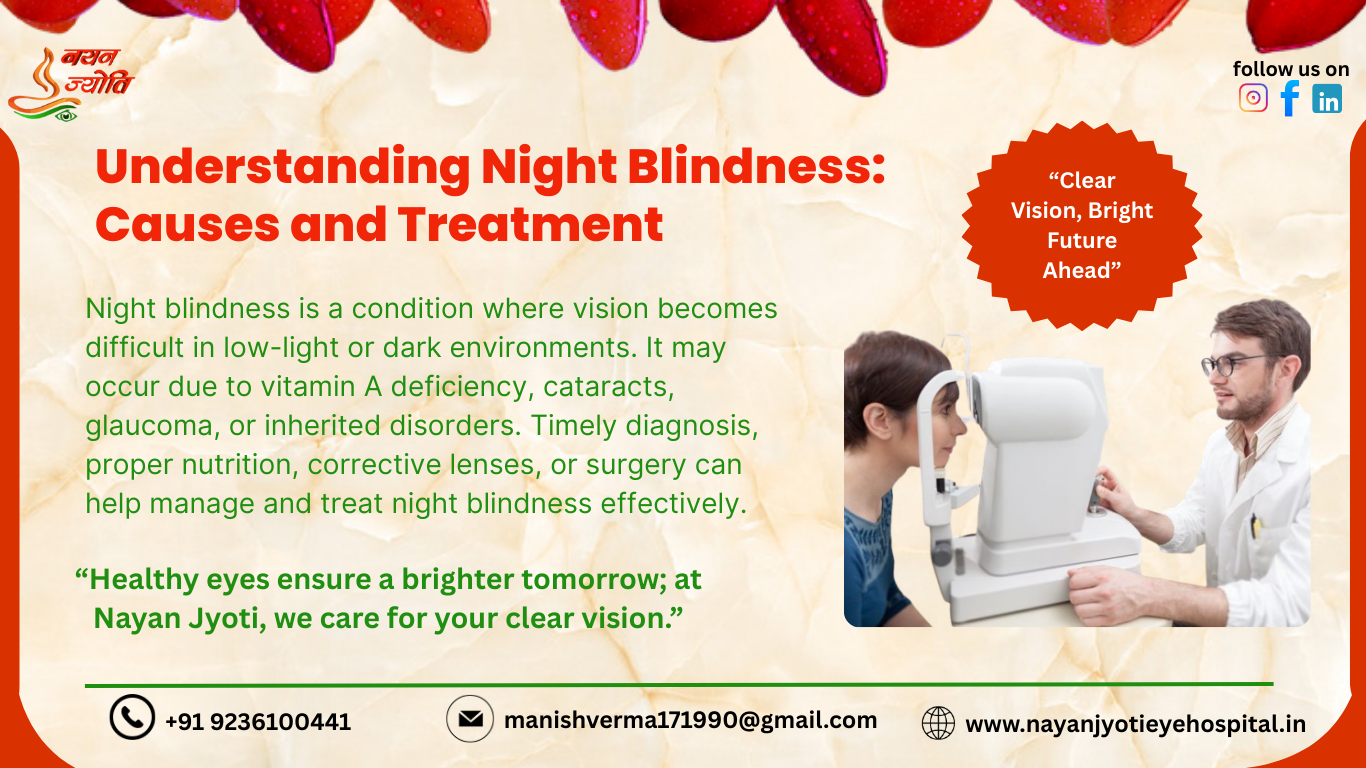
Night blindness, medically known as nyctalopia, is a vision problem where individuals struggle to see clearly in dim light or at night. This condition often signals an underlying eye disorder and should not be ignored.
The most common causes include vitamin A deficiency, cataract, glaucoma, severe myopia, or retinal diseases such as retinitis pigmentosa. People with night blindness usually face difficulty while driving at night, moving in dark spaces, or recognizing objects under low light.
The good news is that night blindness is treatable in many cases. Proper eye examination helps identify the root cause. Treatment may include vitamin supplements, cataract surgery, prescription glasses, or managing related eye diseases.
Symptoms: Blurred vision in low light, delayed adjustment from bright to dark, trouble driving at night
Causes: Vitamin A deficiency, cataract, retinal issues, diabetes, glaucoma
Treatment: Nutritional changes, corrective lenses, medications, or surgery (depending on the cause)
Prevention: Regular eye check-ups, healthy diet, and early treatment of eye conditions